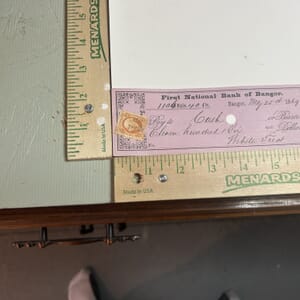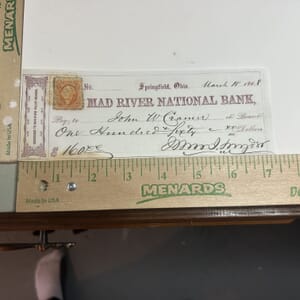
Richmond, Virginia, 1871: Six years after Lee’s surrender, the city was rebuilding brick by brick. The Merchants National Bank represented something fragile and essential—a place where Southern commerce could resume under federal watch.
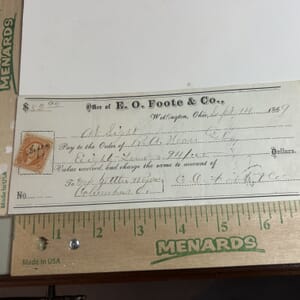
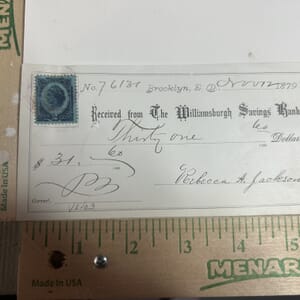
This revenue stamped check captures a precise moment in Reconstruction finance. After the Civil War, Congress imposed federal tax stamps on financial documents to rebuild the Treasury depleted by war. Every transaction required proof: the stamp, the cancellation mark, the federal seal. Banks like Merchants National became enforcement points for a new financial order.
What collectors recognize here is the machine cancellation—a crisp mechanical strike that proves this check passed through 1870s processing systems. It’s dual evidence: a banking record and a tax document, showing how Richmond’s merchant class navigated federal oversight during economic recovery. The specificity matters. This isn’t generic Americana; it’s a primary source of how Reconstruction worked at the local level, transaction by transaction.
Rare for revenue stamp collectors, banking history specialists, Civil War ephemera hunters, and Virginia document collectors. A tangible artifact of how nations rebuild through taxation and institutional trust.