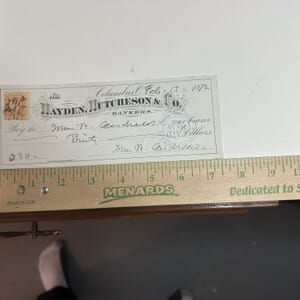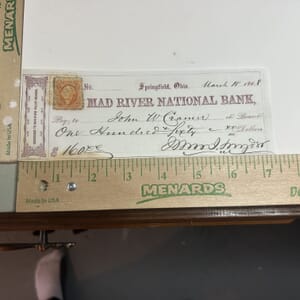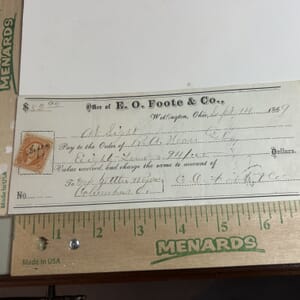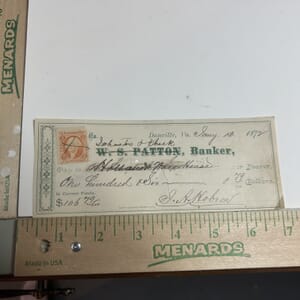
Maine’s lumber boom was at its height in 1869, and Bangor was the epicenter—a raw, ambitious river town where fortunes were made in timber and maritime trade. This hand-cancelled check from the First National Bank of Bangor captures that exact moment of American commercial expansion, signed and stamped by bank officials conducting the routine business that built industrial America.
First National Banks were chartered under the National Bank Act of 1863, part of Lincoln’s financial restructuring during the Civil War. This particular check is a window into how money actually moved through the country in the immediate post-war years—no electronic transfers, no clearing houses, just paper, ink, and trust. The hand-cancellation marks are authentic period banking practice, each stroke a bank teller’s certification that this transaction was real and complete.
For revenue stamp and fiscal history collectors, checks from early national banks are essential documents. They document the banking infrastructure of a specific town, the exact business practices of the era, and the transition from state to federal currency control. Bangor was already a major commercial hub by 1869. This check is a piece of that city’s economic story.