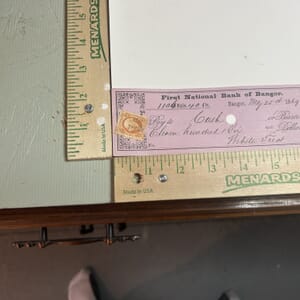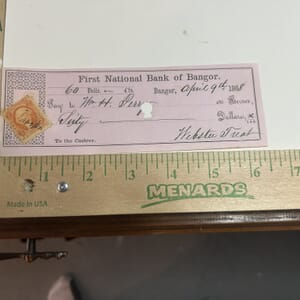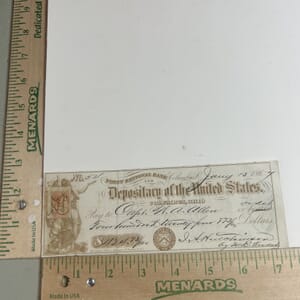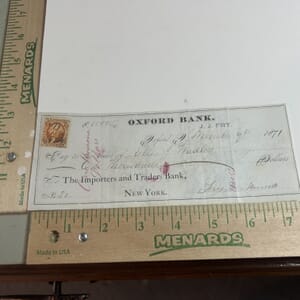
Brooklyn in 1879 was surging—the waterfront bustled with industry, and the Williamsburg neighborhood was attracting working families seeking stable banking. This receipt from The Williamsburg Savings Bank, founded in 1851, captures that moment: a modest slip of paper documenting a routine transaction that survived nearly 150 years.
What makes this piece essential is the hand-stamped two-cent revenue stamp. These stamps were mandated by the Internal Revenue Act of 1862 to tax financial documents and fund the Civil War effort. By 1879, fourteen years after the war’s end, using them remained standard practice on bank receipts—yet few survive intact with their original postmark. The bank’s hand-applied mark creates an authentic snapshot of how commerce worked before electronic records.
The Williamsburg Savings Bank was crucial to Brooklyn’s immigrant and working-class communities, offering accessible savings accounts during the borough’s industrial transformation. This receipt is direct evidence of that history—a tangible record of ordinary financial life in Gilded Age America.
For collectors of fiscal ephemera, revenue stamps, or Brooklyn Americana, this is an unmediated connection to 19th-century banking culture and monetary policy.