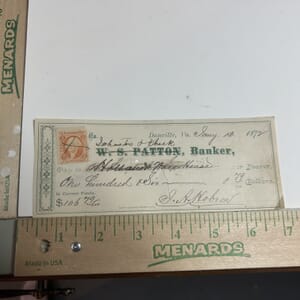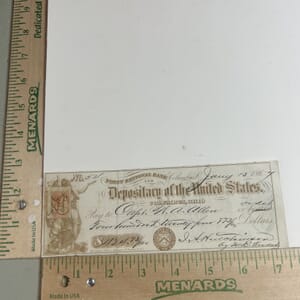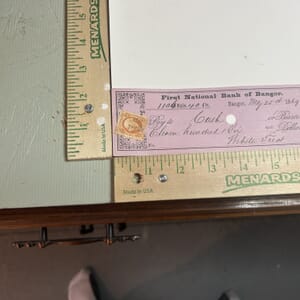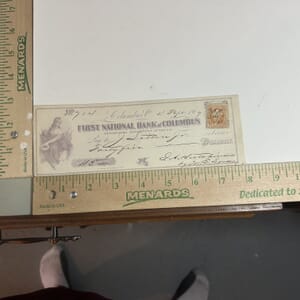
Ohio in 1869 was rebuilding. Four years after Appomattox, businesses across the state were reclaiming their footing in a transformed economy. This check from E.O. Foote & Co. in Wellington, Ohio, is the paper trail of that recovery—stamped with a 2-cent revenue stamp and bearing multiple handwritten signatures on the verso.
Revenue stamps tell a specific story about American commerce. After the Civil War, the federal government needed funds, and nearly every financial transaction became a taxable event. This hand-stamped check represents that moment when the government inserted itself into everyday commerce, taxing not just goods but the flow of money itself.
The multiple signatures on the back document the chain of endorsement—standard practice before modern banking infrastructure. Each signature represents a person who held this piece of paper, endorsed it, passed it along. The original folds mark where it was carried or filed away. For collectors of fiscal history, 19th-century Ohio business documents, and revenue stamp ephemera, this is both a tangible record and a relic of economic transformation.