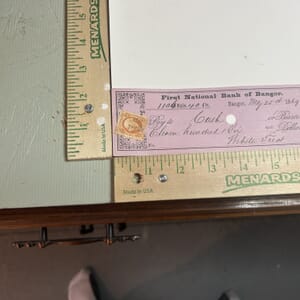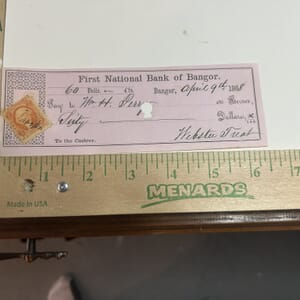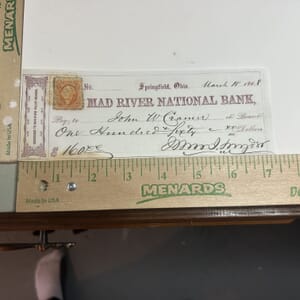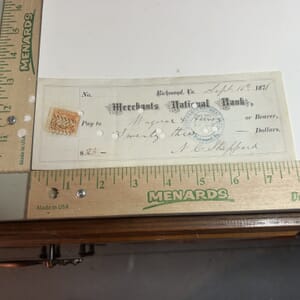
Columbus, Ohio, 1867. A small piece of paper carries enormous historical weight—a 2-cent revenue stamp from a moment when the nation’s banking system was being rebuilt from scratch after the Civil War. This hand-cancelled stamp, issued for the First National Bank in Columbus, documents a transaction that required federal oversight and official documentation to authenticate.
Revenue stamps were the government’s way of tracking and taxing financial transactions during the 19th century. Each denomination corresponded to specific document types—mortgages, checks, promissory notes—creating a paper trail of commerce. The engraved vignette showcases the security printing techniques that made these stamps difficult to counterfeit, a critical concern in an era when financial fraud could destabilize entire institutions.
What makes this piece compelling to collectors is its specificity: it captures a single, verifiable transaction in a real place during a pivotal moment. The hand cancellation marks prove it was actually used, not simply printed and filed away. Columbus banking records from this period are sparse, making stamps like this among the few surviving documents of everyday financial life in Ohio during Reconstruction. This is ephemera that survived because it mattered—because someone filed it, preserved it, and it traveled through 155+ years of American history to reach a collector’s hands.