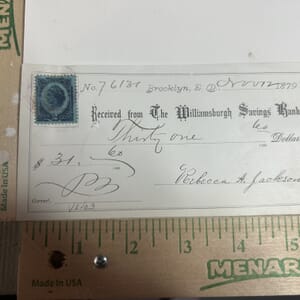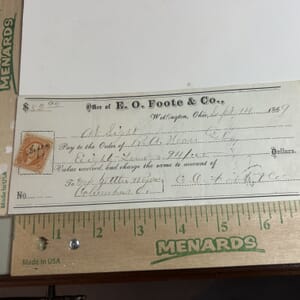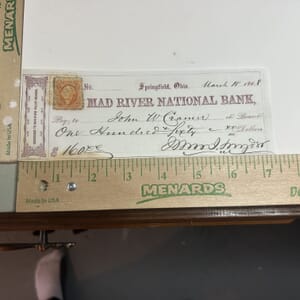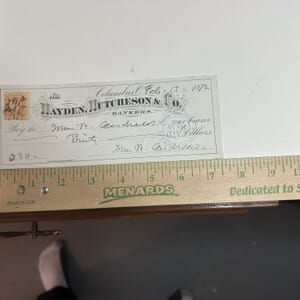
Maine’s banking system was rebuilding in 1868, just three years after the Civil War ended and the nation’s financial infrastructure hung in fragile recovery. This First National Bank of Bangor check—hand-canceled and punched with that distinctive center hole—is a snapshot of that uncertain moment, when every transaction carried the weight of a country learning to trust itself again.
The punched-out center was standard practice: banks physically destroyed checks to prevent reuse and fraud, a low-tech security measure that feels almost quaint now. What makes this piece remarkable is the hand-canceled revenue stamp, evidence of the federal tax system that funded Reconstruction. During this period, even routine banking moves were taxed—a check this small carried stamps as proof of payment to the government.
First National Banks were chartered under new federal law just years before this check was written. Bangor, Maine’s principal port and lumber hub, depended on these institutions to finance the timber trade that made the city prosperous. This isn’t just a canceled check—it’s a record of how ordinary commerce kept a fractured nation solvent. For fiscal historians and Americana collectors, these stamped, punched artifacts connect directly to post-Civil War economic policy and regional financial recovery.