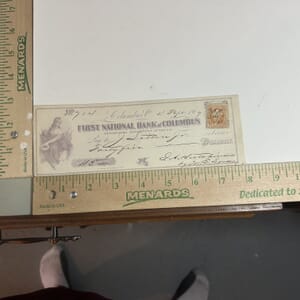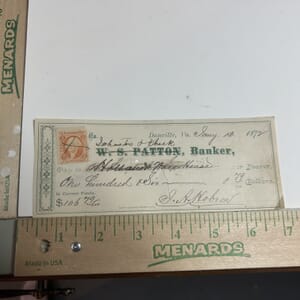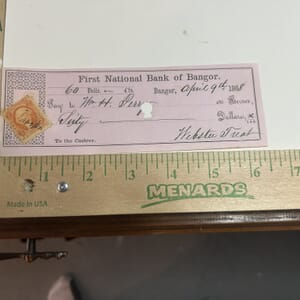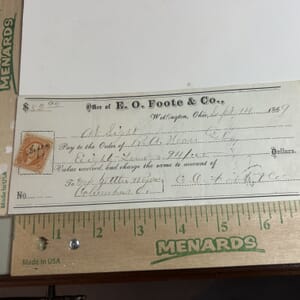
Summer 1916: a farmer or merchant in Cleveland, North Dakota walks into a local bank to settle accounts. The teller stamps this check with a four-cent revenue stamp and cancels it by hand—a requirement tied to federal revenue collection during the Progressive Era. Revenue stamps on checks became standard after 1917, making earlier stamped checks like this one particularly scarce.
This is not a postage stamp—it’s a financial document artifact. Revenue stamps funded government operations and were required on negotiable instruments based on transaction type and amount. The hand cancellation with pen strokes across the stamp confirms actual use, not a specimen or proof. This particular piece connects directly to early-20th-century North Dakota banking, when small-town banks anchored local commerce before consolidation reshaped American finance forever.
For revenue stamp collectors and financial history researchers, canceled checks from specific banks and dates are primary sources—original records of commerce, taxation, and regional economic life. Cleveland, North Dakota sits in Ramsey County, a wheat and agricultural heartland. This check survived a century of filing, handling, and storage in a way that few financial documents do. It’s tangible proof of a transaction that mattered to someone in 1916.