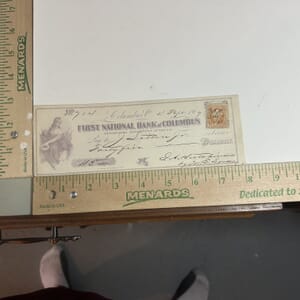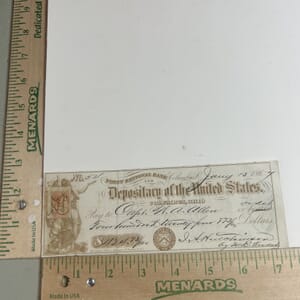
Columbus, Ohio, 1866. The Civil War has ended just months before, and the nation’s financial systems are still finding their footing. A clerk at Rickly & Brother carefully fills out this check—a piece of paper that would have been routine business, until Congress made it something more.
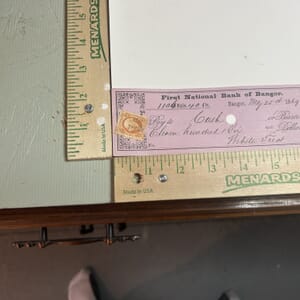
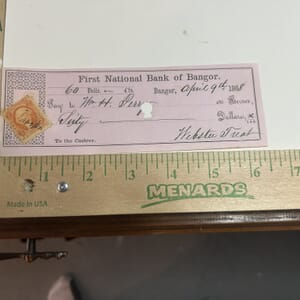
The hand-cancelled revenue stamp affixed to this check tells the real story. During the Civil War itself, Congress imposed federal taxes on financial documents to fund the Union effort. By 1866, that requirement continued—a lingering reminder that the war’s grip on American commerce hadn’t fully released. The signatures on the reverse side are unusual for a bank check, capturing the authorization of two individuals whose names are now part of Ohio banking history.
This document survived 158 years because it mattered to someone. Revenue-stamped checks from this era are scarce; most were discarded once transactions cleared. Collectors of Civil War Americana, fiscal history, and 19th-century banking documents prize these pieces. Each one is evidence of how a nation rebuilt its economy in the aftermath of conflict—and how ordinary people, in ordinary moments, left their mark on history.